Morocco on our mind
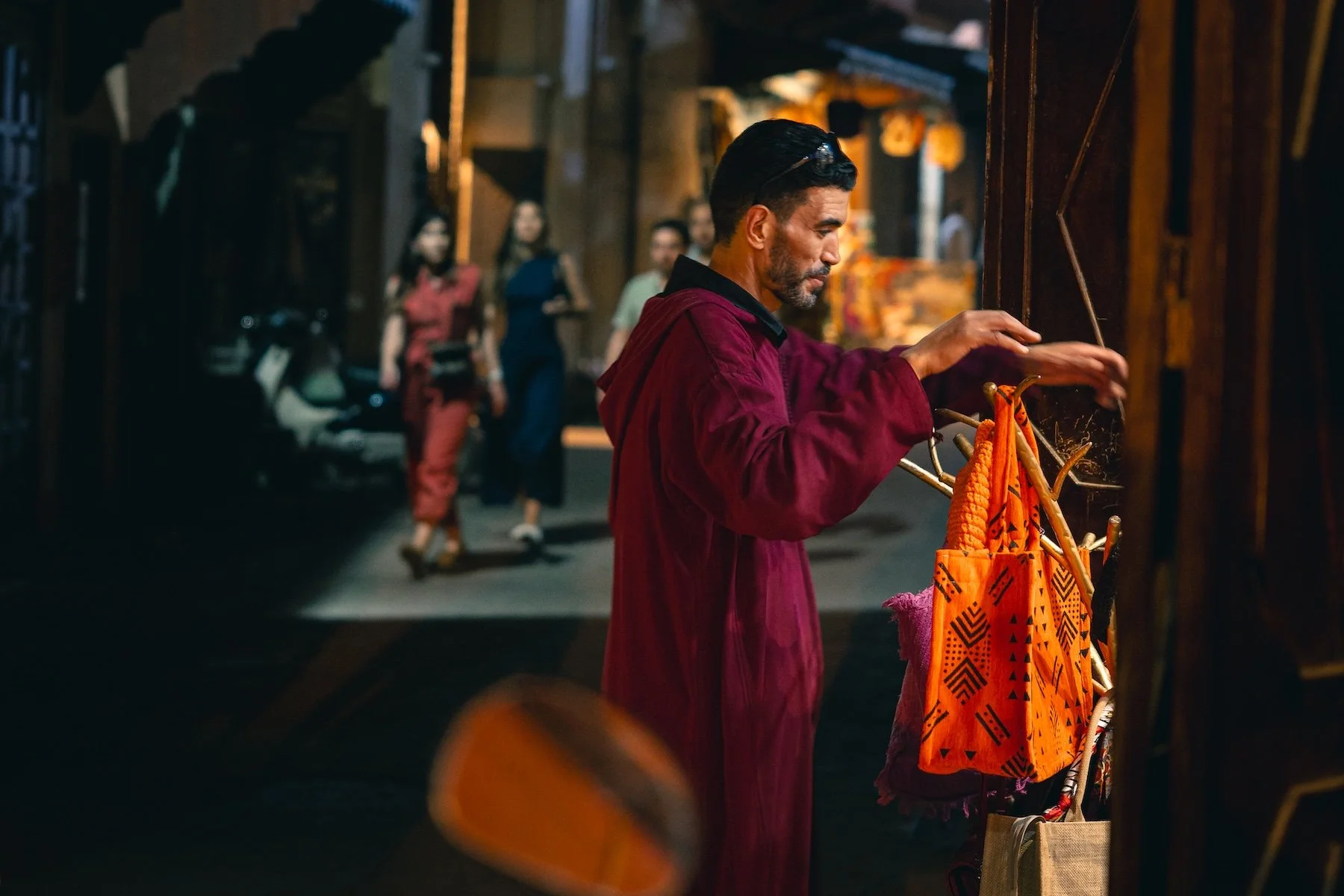
A vendor tends to his wares in the Marrakech medina © Joe Newman
My wife, daughter and I just spent eight days in Morocco, meandering through the medina in Marrakech, hiking up into the Atlas Mountains and trying to eat our way through the seemingly endless varieties of tagine.
It was a great spring break getaway, the kind where the schedule is loose and the agenda is mostly about food and wandering.
But I also went with a question running quietly in the background. Could this work as a photography workshop location?
The short answer is yes. The longer answer is also yes but with some cultural and logistical complexities to consider.
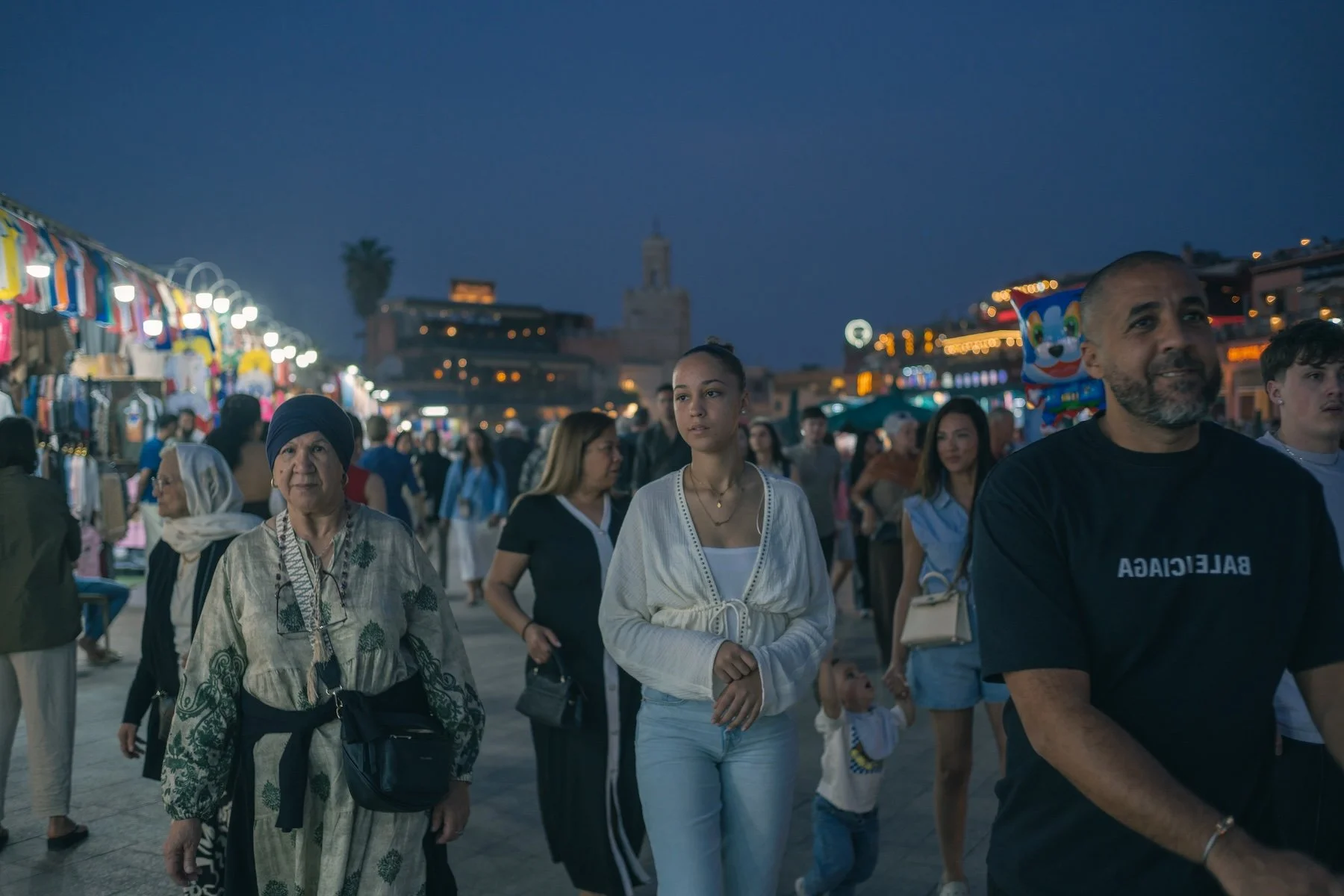
Blue hour on the Djemaa el-Fna, the great central square in Marrakech © Joe Newman
Marrakech
There is nothing subtle about arriving in Marrakech. The Djemaa el-Fna — the great central square — is an open-air carnival with snake charmers, henna artists, monkey handlers, smoke from a hundred food stalls and the call to prayer cutting through it all at dusk.
The medina's warren of souks and riads and winding alleys rewards the kind of slow, patient wandering that photographers love. The light in the late afternoon, bouncing off ochre walls and filtered through latticework, is extraordinary.
The architecture alone could keep a photographer busy for days. Doorways, tilework, geometric shadows. This is a place where you can work a single street corner for an hour and not exhaust it.
As a change of pace, we drove out of the city through winding roads and terraced hillsides and into Ourika Valley for an overnight trip. The valley sits about an hour south of Marrakech and it ends at a busy little village called Setti Fatma. About a half hour hike above the village, you will find the first two of seven waterfalls. (Don’t ask me how long it takes to get to the third waterfall because two was plenty for me).
Our guide told us that it had rained this spring more than it had in the last 15 years and the valley was unusually lush against the dry red stones. On the hike up, I kept thinking about golden hour up here, shooting the valley as the shadows climbed.
But here’s the thing: I’m not even sure if the Ourika Valley and its waterfalls makes it into a potential itinerary because there’s just so much else to photograph in Morocco.
The question I kept coming back to
The thing that gave me the biggest pause is that most of the Moroccans I encountered in public spaces were not happy being photographed. Several shook their finger at me and said “no photos.” None in an angry way but a few in a tone that seemed to indicate they were a bit tired of having to constantly repeat this phrase.
In every other context, the people we met were warm and friendly.
This isn't a small logistical detail. In our X-Pedition workshops, we’ve built street photography into our Hanoi and Cuba trips as a feature. The whole framework — learning to see, making contact, working a street over multiple visits — depends on the photographer-subject relationship being, at minimum, tolerant. In Vietnam, that relationship tends to be open. In Morocco, at least in my brief sample size, it isn't.
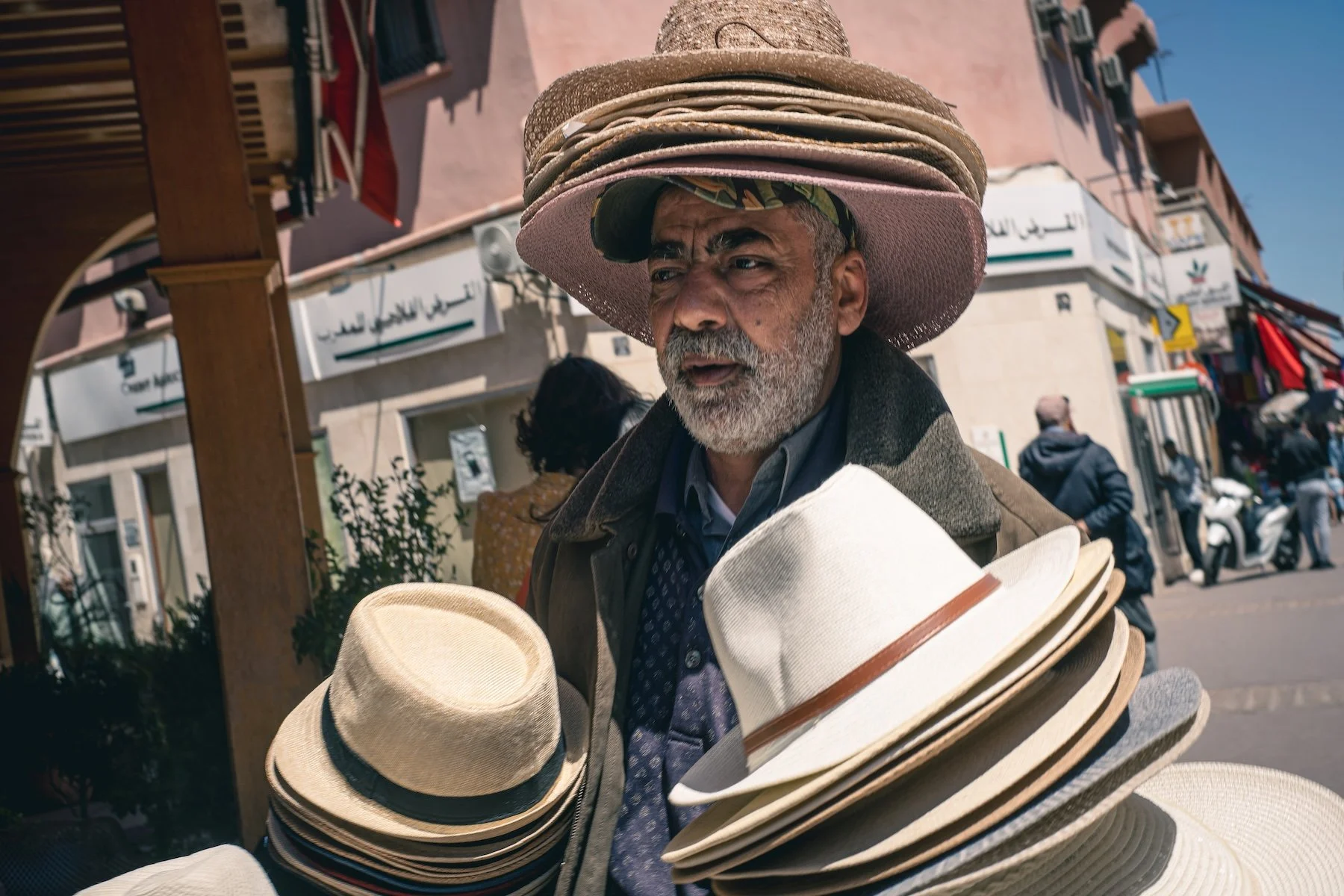
A hat vendor works the streets of Marrakech wearing his entire stock © Joe Newman
On the flight home, I thought about how to handle this. You can certainly find people who don’t mind having their picture taken, though the process might be equal parts frustrating and rewarding. And there’s always people willing to pose in exchange for cash. Of course, there are also techniques for working without being noticed, such as shooting from the hip or standing unseen off to the side.
Asking workshop participants to work that way sits uneasily with one of the basic tenets of what we do — respecting the cultures we visit. I don't know enough yet to say whether that tension is resolvable. It's the question I most need to answer before this becomes a real program, and it means more conversations with Moroccans before the next scouting trip.
So if Morocco works — and I think it does — it might work best as a different kind of workshop.
What a Morocco workshop might look like
The structural shift I keep coming back to is one where the workshop centers on landscape and architecture. That's a different and potentially rich photographic focus and Morocco is an exceptional terrain for it.
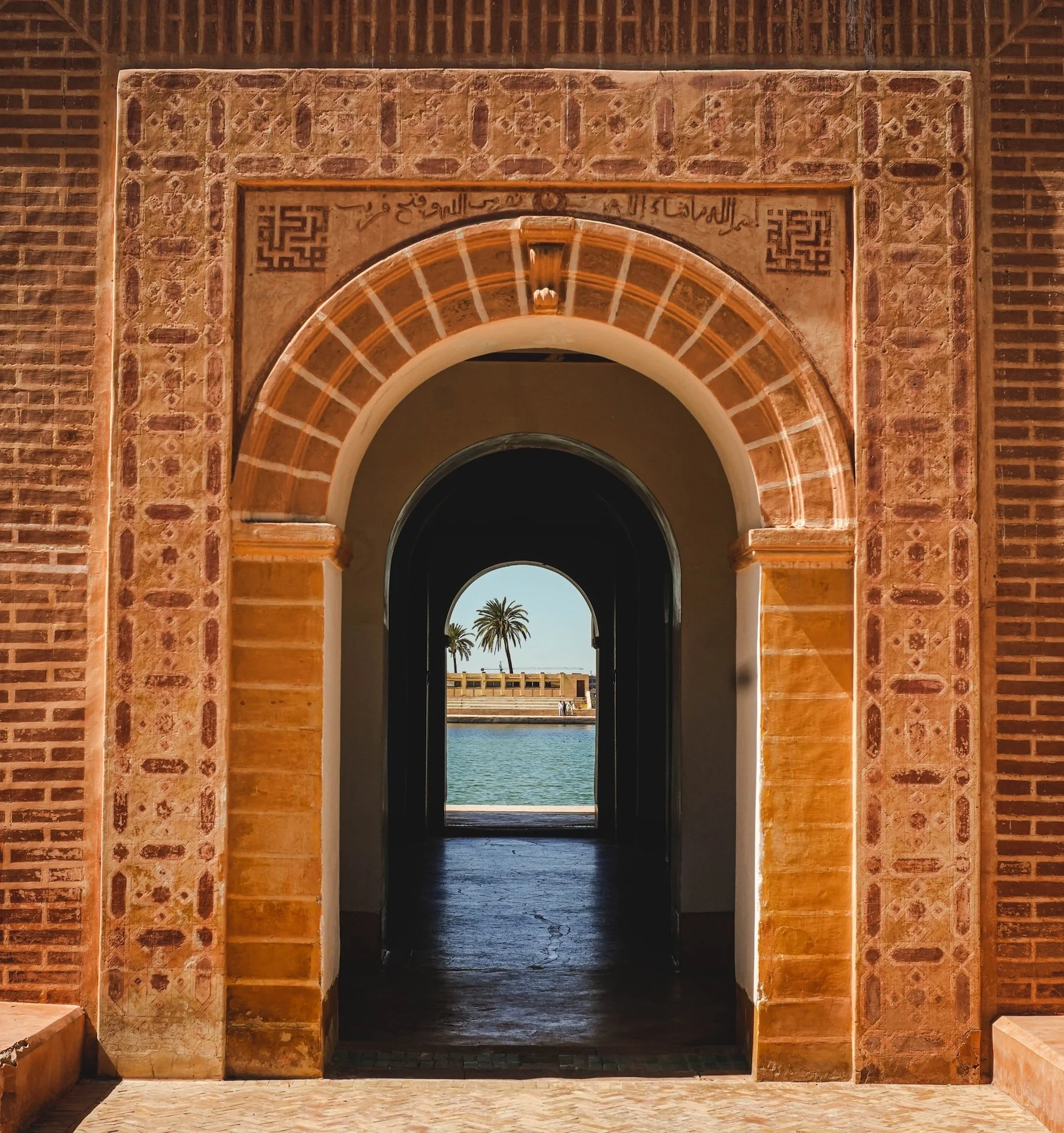
Moorish stonework framing the man-made lake at Menara Gardens in Marrakech © Joe Newman
What I'm imagining is something like this: a few days based in Marrakech, with the group shooting sunrise and sunset together — the medina in early morning light before the crowds arrive, the ramparts at golden hour, possibly the valley on a day trip. During the middle of the day, participants explore on their own. They're free to practice street photography if they want to — the opportunity is there for anyone who wants to find their own way into it — but the structured workshop time is focused on light, landscape, and the built environment.
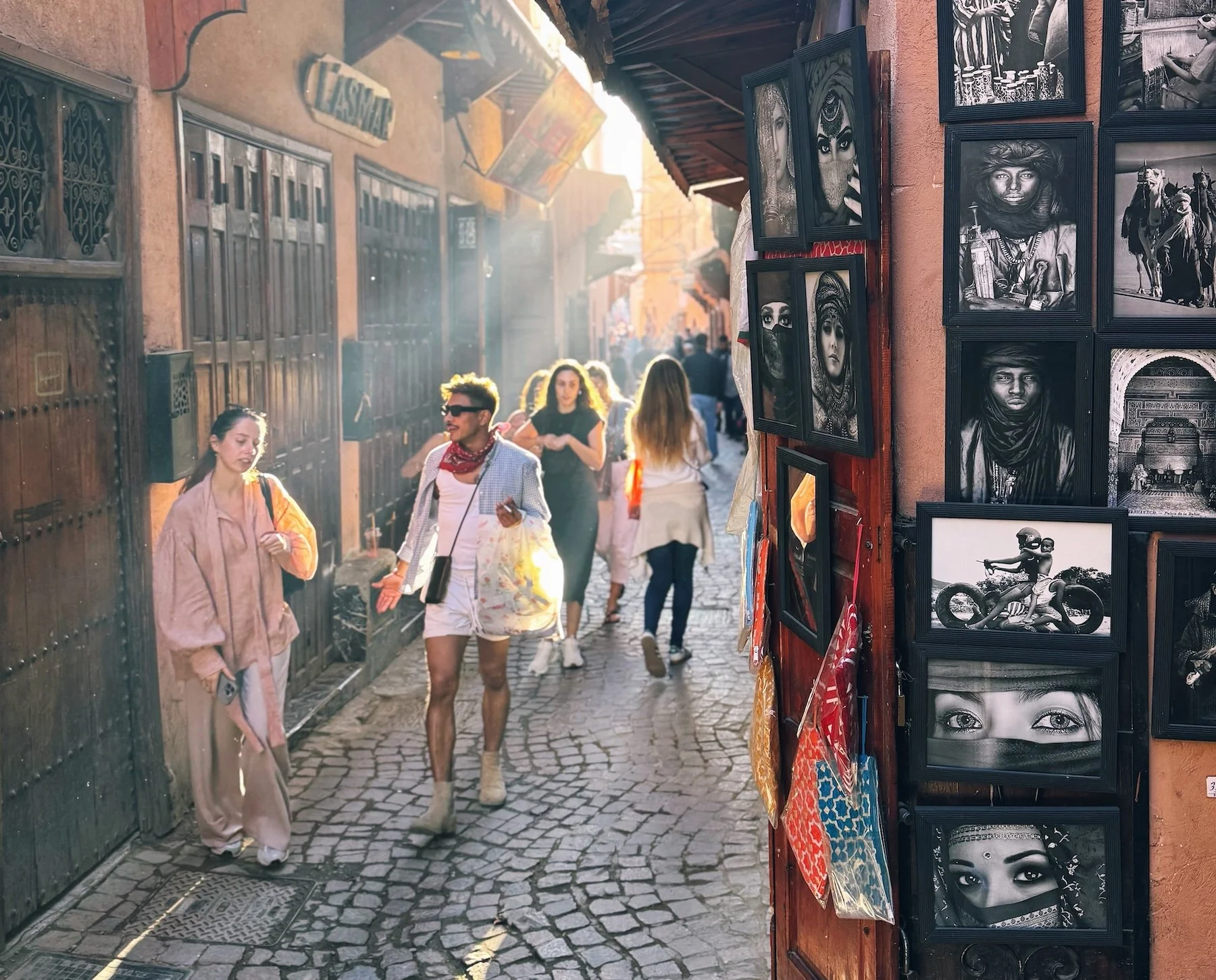
The medina when the light starts getting good © Joe Newman
From Marrakech, we'd head to the desert. If you're going all the way to Morocco, you should shoot the Sahara. The dunes at Erg Chebbi, the light at dawn and dusk, make impactful images. The desert is also where the workshop's landscape focus feels most natural and most rewarding.
I'm thinking we’d finish in Casablanca. It's different from Marrakech, more European, a little less tourist-centric. The Art Deco architecture along the coast looks like it would be worth a full day on its own. It gives the trip a different register to end on.
What I'd leave out — at least for a first iteration — is Chefchaouen, Tangier and Tétouan. All of them are worth the trip. None of them fit in a 10-day program without making everything feel rushed. Better to do Morocco properly in a focused geography than to sprint through the country and photograph nothing deeply.
Still thinking
I came home from Morocco excited about the possibility but still a bit cautious about striking out into the unknown, away from what we already know and do so well. What I have is a clearer picture of what a workshop there would need to be — and a belief that it could be something special if we designed it honestly around what the country offers rather than trying to impose a framework it doesn't fit.
The Moorish architecture, the medina at blue hour, the Sahara at sunrise: there's a workshop in there. It's just a different one than Hanoi. I’d love to hear your thoughts on whether a workshop in Morocco would interest you.
More soon.
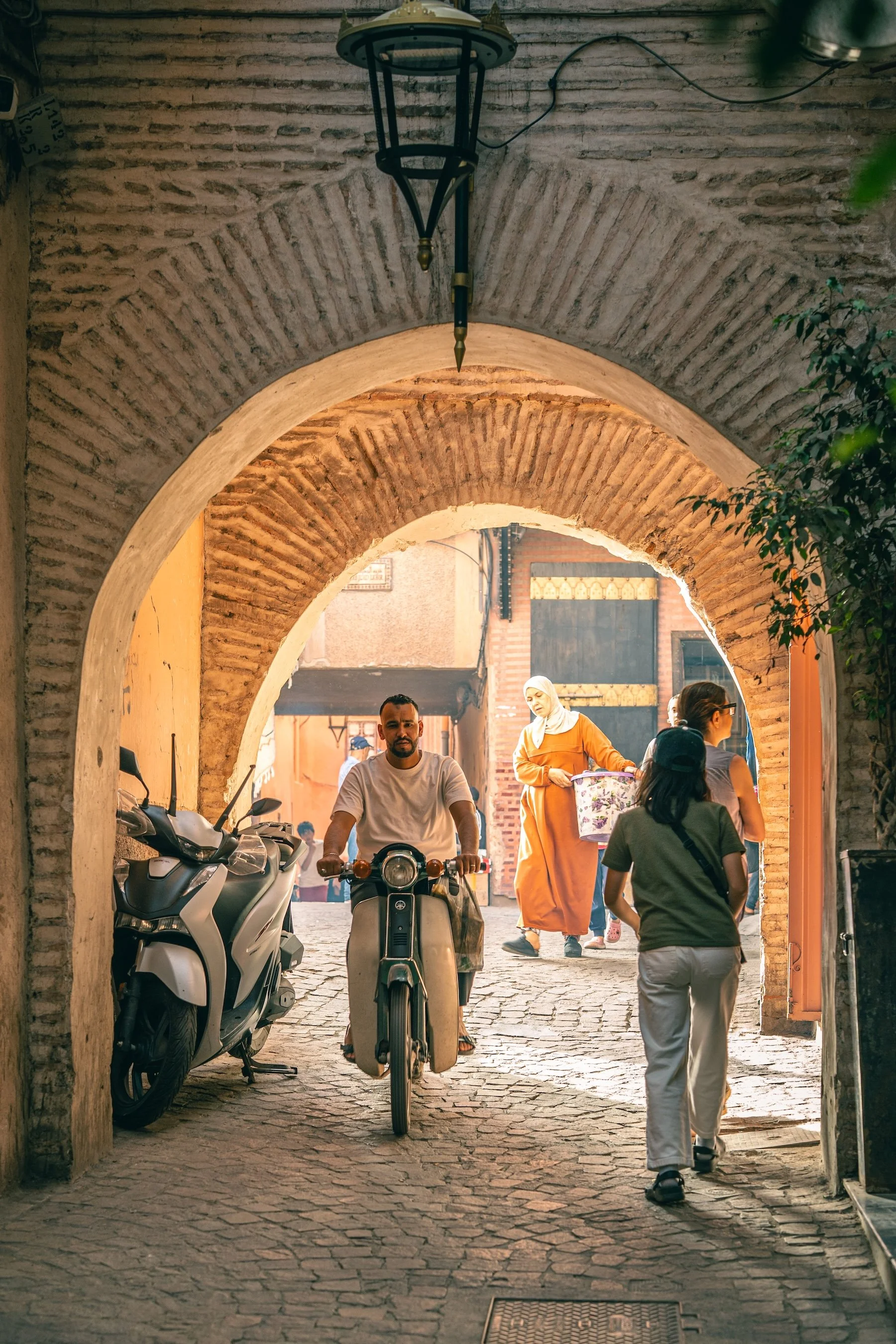
Arches abound in the narrow alleyways of the medina © Joe Newman