It's not really a street photography workshop — and that's worth explaining
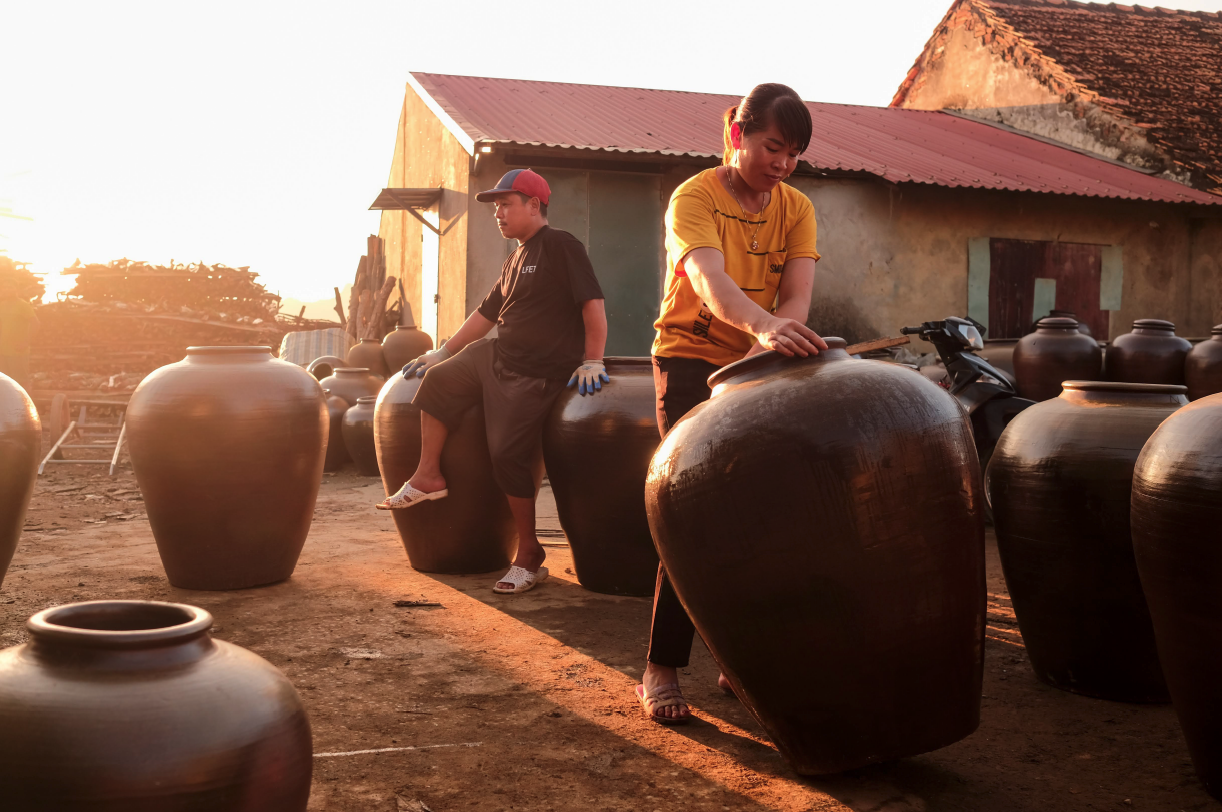
Workers move the great urns before the day's heat lifts. This is the image you make when you find the light first, then wait © Jef Taylor / X-Pedition Hanoi 2022
A potential participant recently decided to pass on this fall’s X-Pedition Hanoi workshop. Their reason? Street photography just wasn't their thing.
I didn't push back. It's their decision to make, and honestly, I get where the assumption comes from. Ibarionex Perello is widely known as a street photographer. It's how he's described. It's part of his reputation and it's probably one of the first things that comes up when you search his name.
If you're building a picture of what a workshop led by him might look like, "wandering Hanoi shooting strangers on the street" is a reasonable thing to imagine.
But it got me thinking. Because while that picture isn't entirely wrong, it's also a significant misread of what we actually do over nine days together — and more importantly, of how Ibarionex actually teaches.
How He Thinks About Photography
Most people pick up a camera and aim it at things that interest them. Ibarionex is asking his students to do something harder — to see the world before they start reacting to it. To find the light. To slow down enough to notice what's already there.
That's not a street photography lesson. That's a photography lesson. It applies equally whether you're in an alley in Hanoi's Old Quarter or crouching beside a potter's wheel in a village outside of Hanoi.
This is what sets his teaching apart. The question he keeps returning to — in workshops, in the nearly 650 episodes of The Candid Frame he's produced since 2006, and across six photography books — is not how to make a better picture. It's what you're actually trying to say. Those sound like the same question but they're not.
The first question has technical answers. The second requires you to figure out what you notice about the world, what draws you to certain moments and not others, what your particular way of seeing actually is. Most photography education skips that part. Ibarionex doesn't.
What this means in practice is that participants come away with a working understanding of light — how to find it, how to use it, how to let it do the heavy lifting in an image. They develop a more deliberate relationship with composition, thinking about the whole frame rather than just the subject in the middle of it. They learn to slow down their shooting and make more intentional decisions. These are skills that transfer to every kind of photography — travel, portrait, documentary, landscape, street.
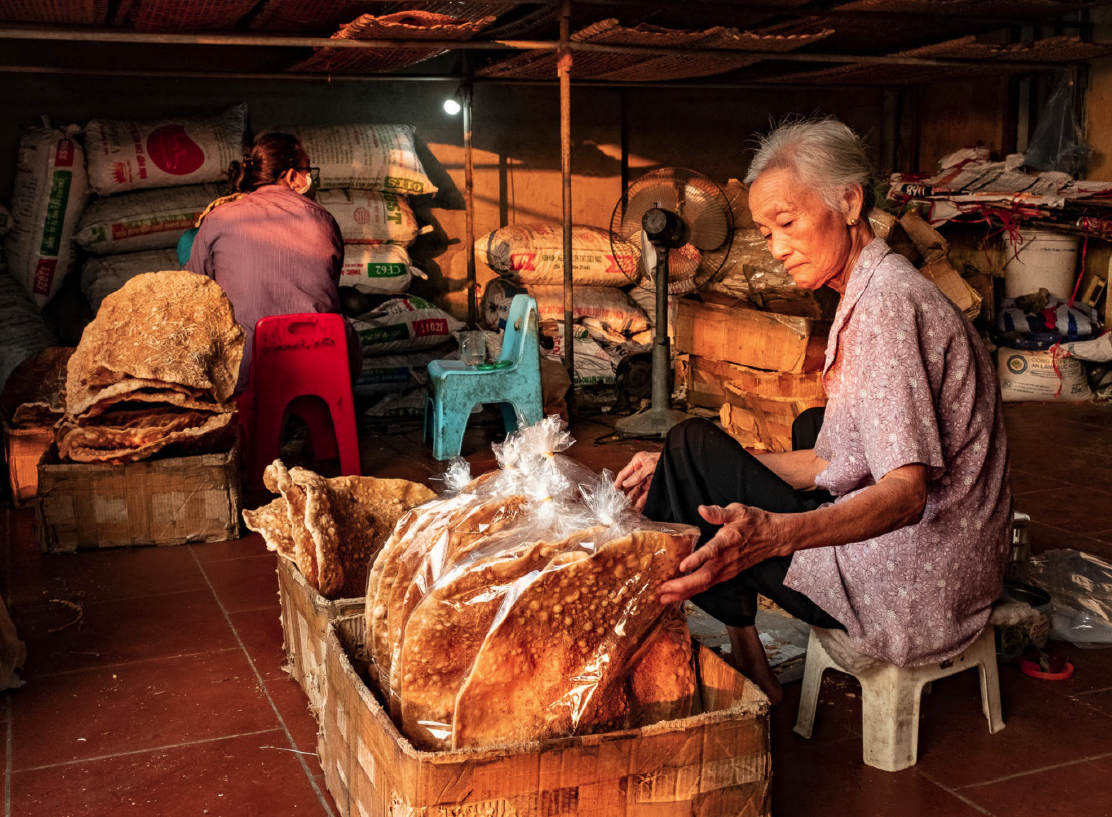
Documentary photography is about being present where the real work happens — and staying long enough for a moment like this to open up © Bob Plotkin / X-Pedition Hanoi 2022
So What Is the Workshop, Really?
The honest answer is that X-Pedition Hanoi is a documentary photography workshop — with a strong emphasis on craft, culture and the kind of deliberate, patient observation that street photography can sometimes work against.
Yes, participants do wander Hanoi during their self-directed shooting time, and plenty of them make street photographs. We build a lot of unstructured time into the program on purpose — time where you follow your own instincts, find your own subjects, and work without anyone looking over your shoulder. Some people gravitate toward the streets. That's completely valid.
But the structured activities that anchor the workshop tell a different story.
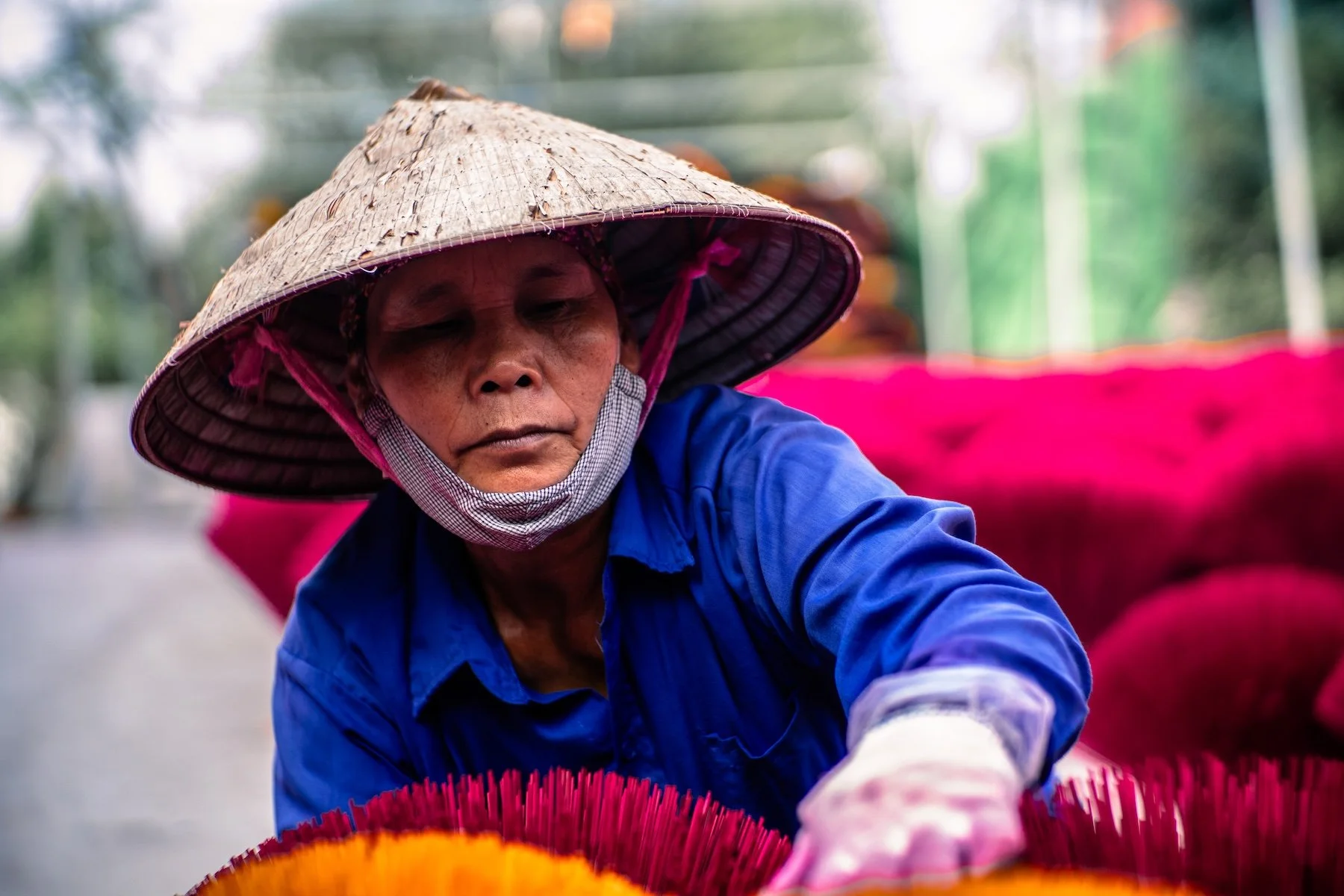
Sorting incense bundles at the village outside Hanoi © Joe Newman / X-Pedition Hanoi 2023
We spend significant time in the craft villages surrounding Hanoi — places where a single trade has defined a community for generations. The pottery village. The rice paper village. The incense village (this year, we're swapping that last one for the drum village, which I'm excited about). These aren't quick stops. We're there long enough to slow down, to watch people work, to find the light, to make pictures that require patience rather than reflexes. They are, in other words, exactly the kind of environments where Ibarionex's light-first, frame-first approach pays off most.
We also visit the Long Biên market — a massive overnight food market that operates on the banks of the Red River in a way that has nothing to do with street photography as a genre. It's documentary work. It's portraiture. It's about access and observation and learning to photograph people in the middle of their actual lives, not as incidental passersby.
Add to that our overnight trip to Tam Coc — boat trips on the river, a traditional temple, the hike up Hang Múa Peak — and the picture that emerges is of something much richer and more varied than a week of hunting decisive moments in the Old Quarter.
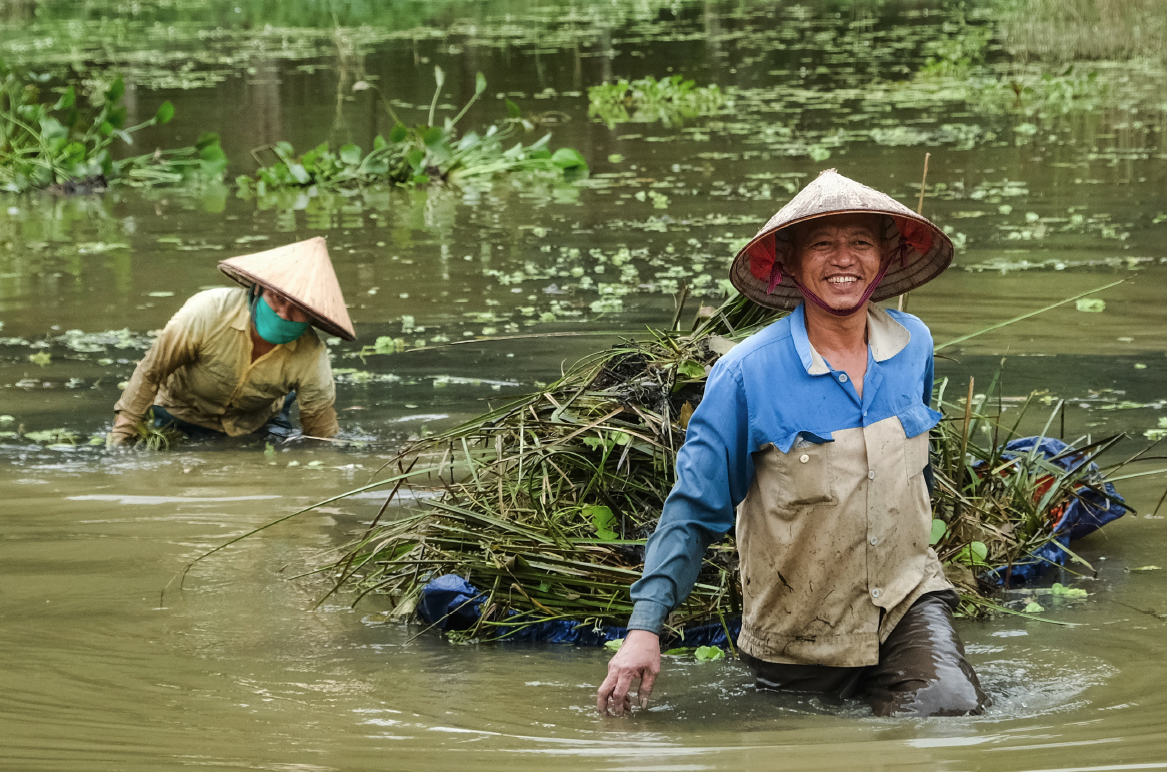
Waist-deep in the waterways of Ninh Bình © Martin Howard / X-Pedition Hanoi 2022
The Label Problem
What happened with this potential participant is a label problem and it's partly on us to solve it. When you lead with "street photographer" in describing your workshop leader, you're setting an expectation — even if the workshop itself consistently goes much deeper than that label implies.
Street photography and documentary photography overlap, of course. But they're not the same thing. Street photography tends to be fast, reactive, and anonymous. Documentary work — particularly in craft villages and traditional markets — is slower, more relational, more invested in context and meaning. It asks different things of you as a photographer and produces a very different kind of body of work.
What Ibarionex brings to both, and to everything in between, is a framework for paying attention. The participants who've come through this workshop know the difference. They've gone home with images of potters' hands covered in clay, of women laying out rice paper sheets to dry in the morning sun, of market vendors moving through the blue-gray pre-dawn light of Long Biên. Those images didn't come from fast reflexes. They came from the quality of attention those photographers were trained to bring.
If You've Been on the Fence for the Same Reason
If street photography isn't your genre and that's been keeping you from looking more closely at X-Pedition Hanoi, I'd encourage you to look again. Street photography is a slice of what the nine days hold — available to you if that's where you want to put your energy but never the whole story.
What the workshop is really about is learning to see more deliberately. To find the light before you find the subject. To know what you're trying to say before you press the shutter. That's knowledge that will change the way you work — in Hanoi, and everywhere you take a camera after you leave.
X-Pedition Hanoi runs October 24 – November 1 and is led by Ibarionex Perello with local program manager Thu Lê Hoài.