
Stuff We Love (Our 2026 list)
Travel gear we've used, tested and love. No affiliate links, no sponsored posts — just honest recommendations for cameras, bags and travel essentials that have earned a place in our kit.
Contents
Proven, reliable, cost effective — The specific gear we’ve carried in our travel bag and stand by.
Travel essentials— No need to hunt name brands here but these items are always on our pre-trip checklist.
Don’t leave home without these apps— These are the apps we make sure all of our workshop participants load onto their phones.
What do you love?
Let us know what you can’t travel without. We’d love to check it out. (By submitting, you agree to receive occasional emails from us. Unsubscribe at any time.)
Proven, reliable, worth the cost
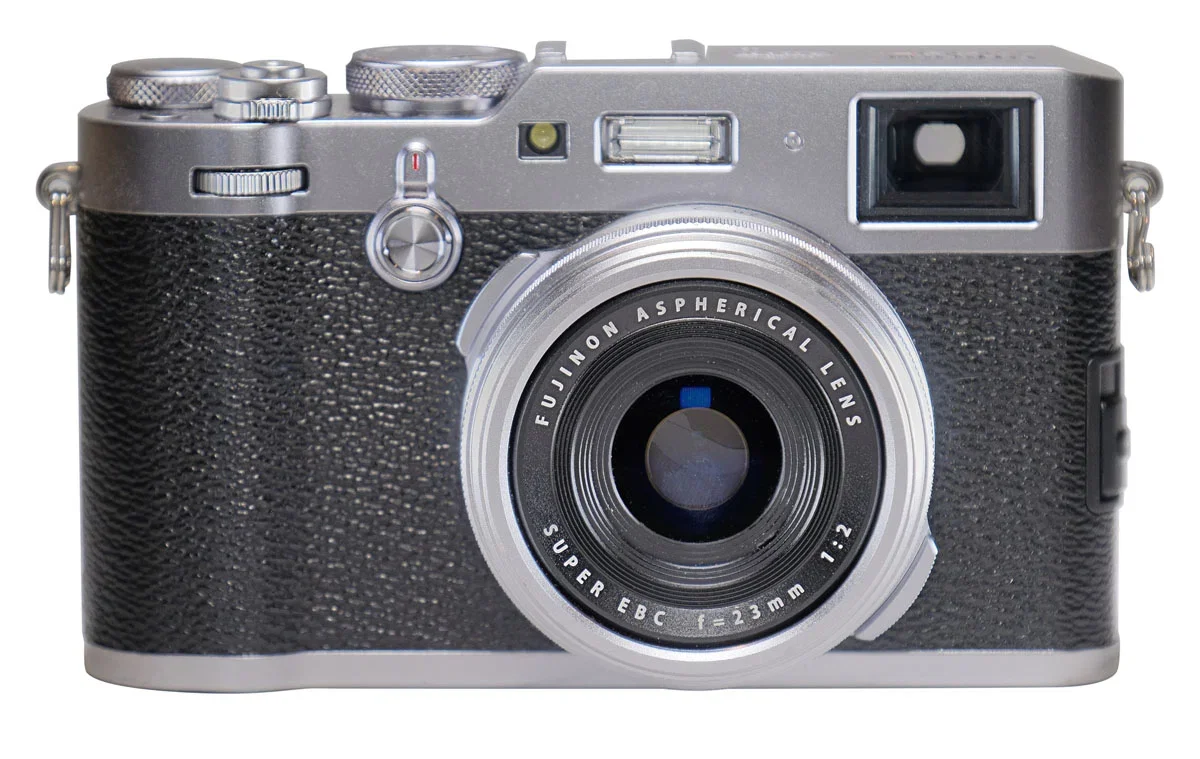
Fujifilm X100F
We've shot with the X100F extensively and keep coming back to it for one simple reason: it gets out of your way and lets you take pictures. If your budget doesn’t matter, by all means, get the newer version; but from where we’re sitting, the cost of the latest model is not worth the upgrade. Not while the X100F can still be had at nearly half the price. Don’t get sucked in by the megapixel hype. The X100F’s 24.3MP X-Trans III sensor delivers files with beautiful color, strong dynamic range and clean high-ISO performance that’s still impressive by today's standards. On the used market it routinely runs $300–400 less than the X100V. You give up a tilt screen, 4K video and weather sealing — none of which matter much if you're here for stills. For street, travel and everyday carry, this is our pick without hesitation.
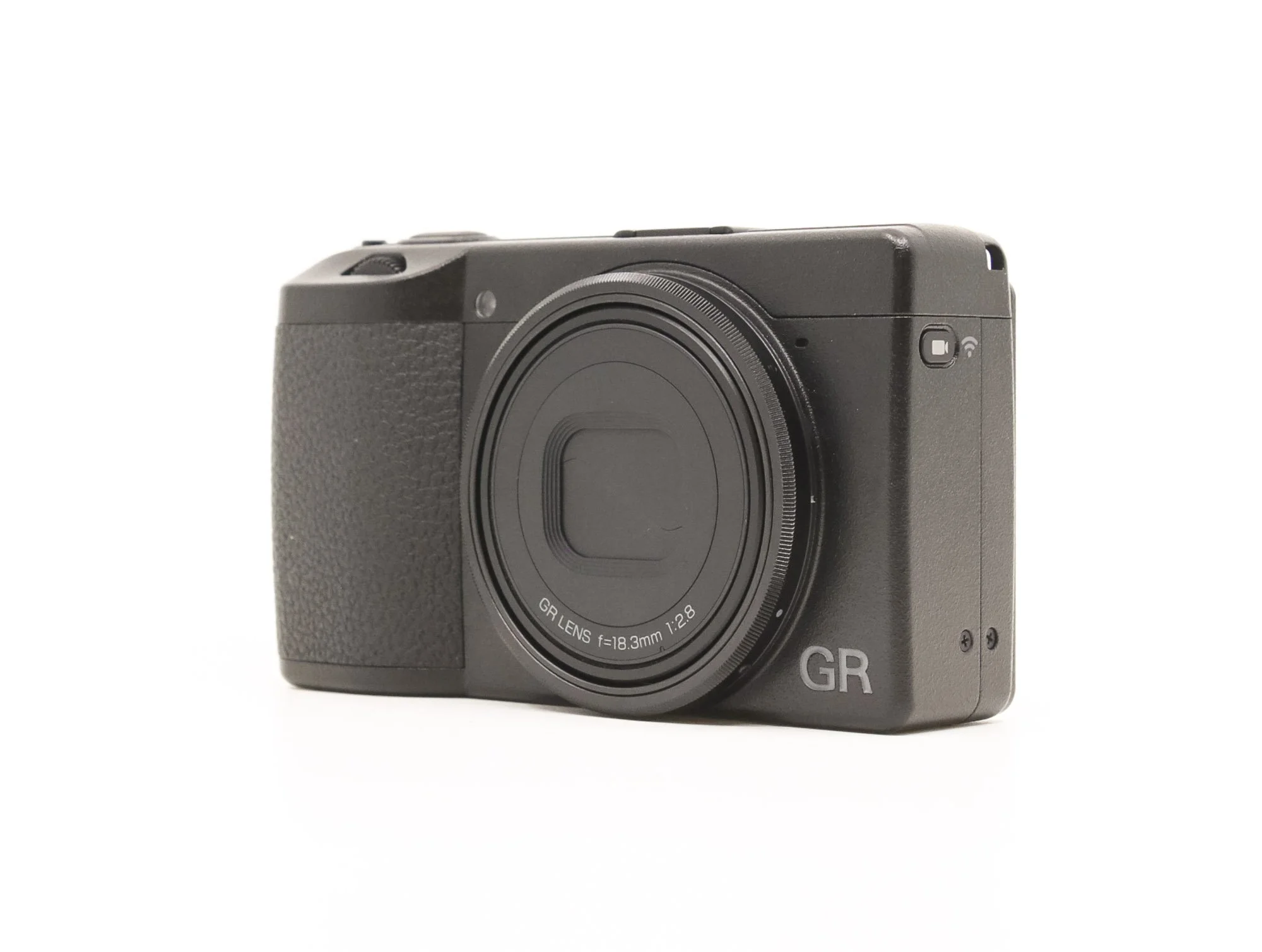
Ricoh GRIII
For the days when you want to walk the streets without a bag on your shoulder, the GR III might be your perfect carry. It's not quite slip-it-in-your-jeans-pocket pocketable — more cargo pocket or jacket pocket — but it's small enough to make a big difference. The sensor dates to 2019 but its 24MP APS-C files are still excellent. Our one issue has been nighttime ISO performance. Things start falling off after ISO 6400. For daytime and early evening street work, none of that matters. A word of caution: Don’t confuse this model with the “Ricoh GR Digital III,” which is a much older 10MP camera. Also, watch the prices carefully — high demand has pushed the used prices on some sites, such as MPB and B&H, far higher than this camera cost brand new. Your best bet might be to keep an eye on the eBay listings.

Think Tank Photo TurnStyle Sling Camera Bag
We've put our sling through the kind of travel that reveals what gear is actually made of — and it hasn't missed a beat. It holds a body and a couple of primes comfortably, which is all you really need to carry on most trips. Beyond the camera compartment there's enough room for the real essentials: your passport, your phone, a small notebook, a spare battery, an SD card case, a charging bank and the other bits that tend to accumulate in your pockets. It travels light but it travels complete. Wear it on your back when you're moving, then rotate it around the moment you need to grab something. In a crowd, it can stay in front of you where you can see it and feel it. If you're looking for one bag that handles a day of shooting and a day of travel with equal ease, this is it
Anker Prime 160W 3-Port GaN.
This isn't the cheapest charger on the market but there’s a reason you should consider paying a bit more. When you're traveling with a camera, phone, laptop and tablet, the old answer was multiple chargers or a cheap multi-port brick that trickle-charges everything. The technology behind this — GaN, or Gallium Nitride — runs cooler and more efficiently than traditional silicon chargers, letting Anker pack 160 watts of output into something roughly the size of a MacBook Air power adapter. The wattage matters. A MacBook Pro under load can demand up to 100W on its own — a cheap 65W multi-port brick won't keep pace while you're actually using it. The Prime 160W delivers a sustained 140W to a single port with enough headroom to simultaneously charge your phone and tablet on the remaining two. And all three ports are equal — any one delivers full power. One caveat: this particular model is USB-C only. If you're still running any gear on USB-A cables, look at the Anker 140W 4-Port version instead.
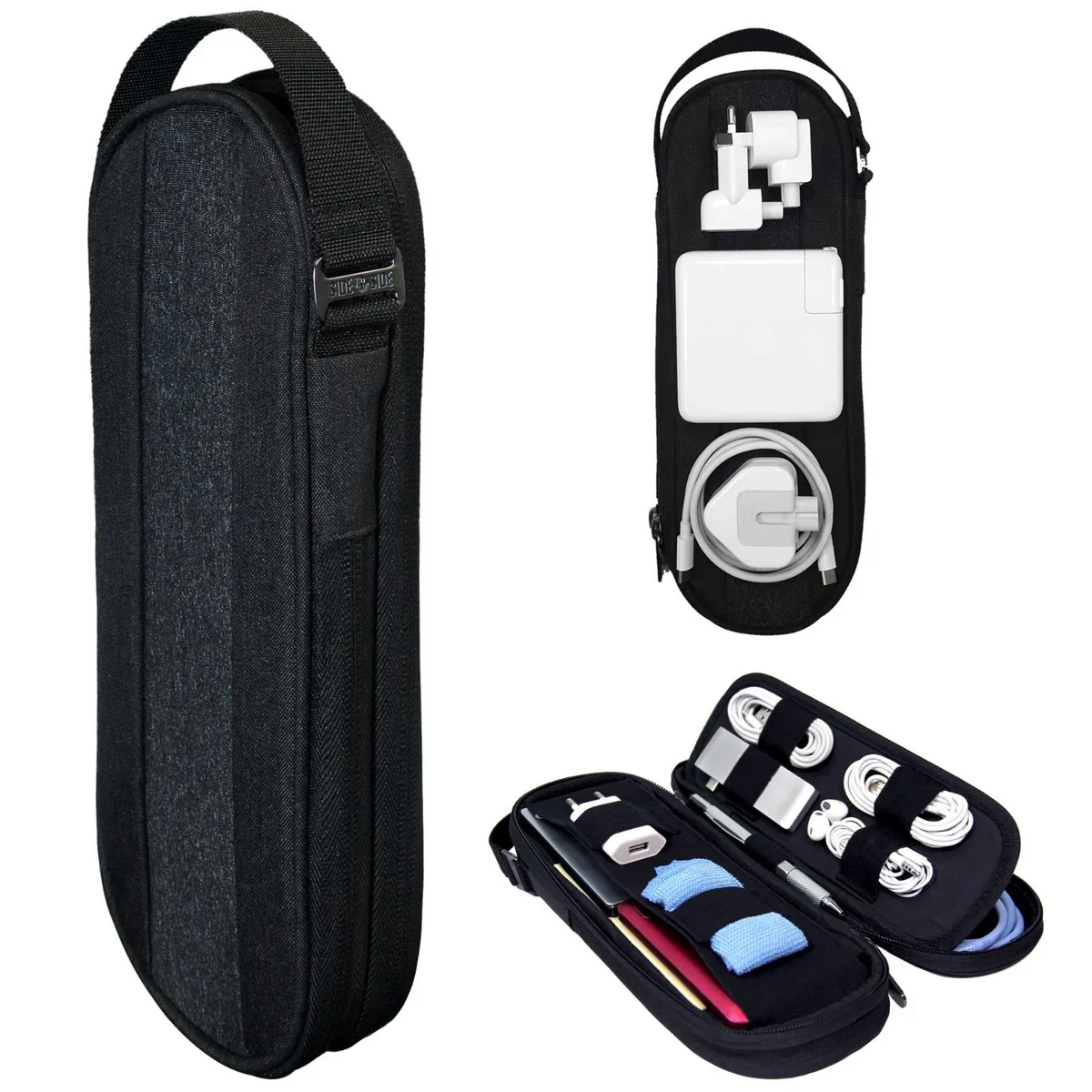
Side by Side Power Packer Tech Bag
We'll be honest — this one sat in a drawer for two years. It was a gift and we were skeptical enough about tech organizer bags in general that we just never reached for it. Then we finally threw it in a bag for a trip and haven't traveled without it since. The Power Packer does exactly what it promises. Charging cables stay untangled and exactly where you expect them, adapters have their own compartment so they're not rattling around loose and the whole thing opens up flat so you can actually see everything at once instead of digging. It's the kind of organization you didn't know you needed until you have it and then can't imagine going without it. One thing worth knowing: it's substantial enough that it won't fit into our sling bag comfortably. We slide ours into a backpack where it fits perfectly and essentially becomes a dedicated tech pocket for the whole trip.
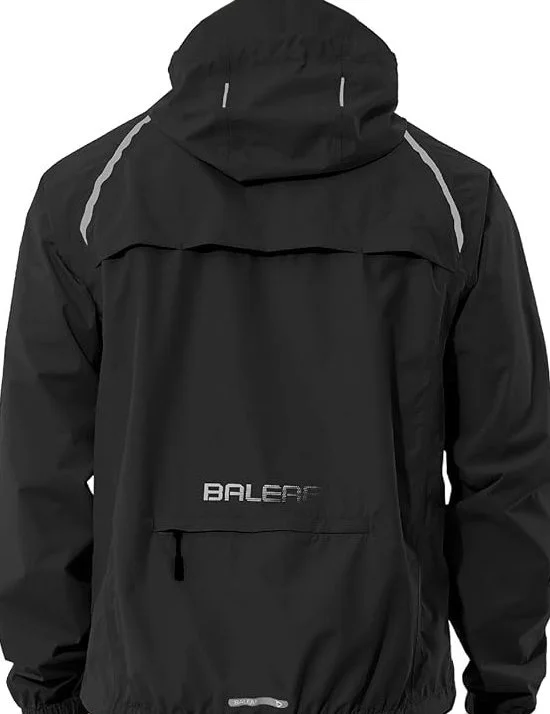
Baleaf Waterproof Windbreaker
Nobody thinks about a rain jacket until they need one — and by then it's too late. This is the one we keep packed at all times. This does everything the big name brands do at a fraction of the price. It's held up through real use without peeling, leaking or falling apart at the seams. Packs into its own pocket, fits in a sling or a backpack and weighs almost nothing. As photographers, we love a light rain. Wet streets reflect light beautifully, crowds thin out and the whole scene takes on a mood that's hard to replicate in good weather. You want to be out in that, not hiding from it. For a pull-out-when-you-need-it raincoat, it does the job completely.
Travel essentials
These are the things that end up in our bags, trip after trip. This is about the item, more than the brand. A solid no-name version often works just as well as the expensive one. Occasionally we've paid more for something specific and been glad we did. We're just sharing what we'd reach for if we were packing tomorrow.
Compression sacks. We travel with a 19-inch rollaboard to stay within international carry-on limits, which means every cubic inch counts. Compression sacks are how we make it work — roll out the air, and three days of clothing becomes surprisingly compact. They double as laundry bags once you're at your destination, which is a small thing that turns out to be very useful. Ours are waterproof, but for most trips that's not necessary — a standard compression sack does the job and costs considerably less.
Power banks. Essential on long-haul flights to Asia, and useful every day once you're on the ground. We've gone through more of these than we'd like to admit and haven't found one we'd put our name on — yet. We're currently traveling with a new MagSafe model that's looking promising, and once it's had a few more trips we'll move it up to a proper recommendation. In the meantime, a few things worth knowing before you buy. Capacity-wise, 10,000mAh is the practical minimum for travel — it'll get you two full charges on most smartphones. For iPhone users, MagSafe (or Qi2 for Android users) is worth seeking out: the magnetic connection snaps directly to the back of your phone and stays there while you're moving, which is meaningfully better than a cable you have to manage.
Power adapters. If you're hitting multiple countries on one trip, an all-in-one adapter covering all four plug configurations is convenient in theory. In practice, most share the same flaw: loose fit. They wobble, lose contact, and occasionally fall out of the wall — a problem when you're trying to charge four things overnight. For single-country trips, individual adapters are smaller, cheaper, and actually stay put. That said, we're testing a newer generation of all-in-ones that are significantly more compact than the typical brick. We'll report back.
Eye mask, neck pillow and ear plugs. Non-negotiable on a 20-hour flight to Asia. Beyond the plane, they earn their place in your bag the first time you end up in a room with streetlight bleeding through thin curtains or a construction crew starting work at 6am next door. You won't need them every trip — but the one time you do, you'll be very glad they're in there. We've also recently added an inflatable seat cushion to the kit after one too many long-haul flights in seats that seemed specifically designed to cause suffering. We'll report back once we've put it through its paces.
Buffs (neck gaiters). There's a reason these became famous on Survivor — if you're stranded on a deserted island, you can find a surprising number of uses for a tube of stretchy fabric. On a photography trip, that holds up: wear one over your nose and mouth as a light particulate filter (useful on high-pollution days in Hanoi), fashion it into a headscarf or skull cap, use it to keep the sun off the back of your neck, wear it as a headband, or press it into service as a quick lens wipe in a pinch. We use ours constantly. We're not putting this in our top picks section because we're not convinced the original Buff brand — at $25 or more — is meaningfully better than the $8-16 alternatives. This is one category where we'd say start cheap, see if you use it, and upgrade later if you feel like you're missing something. You probably won't.
Don’t leave home without these apps
A good camera and a charged phone will take you far. The right apps on that phone will take you further. These are the ones we recommend to every workshop participant before they leave home — some essential, some situational, all worth having before you land.
WhatsApp. In most of the world, WhatsApp is simply how people communicate — your driver, your hotel, your local fixer, the vendor you met yesterday who offered to show you something worth photographing tomorrow. Having it installed before you leave means you're reachable and connected from the moment you land. It's free, works on WiFi, and handles voice calls, video, and group messaging equally well — which makes it the one app that actually earns the word essential.
Google Maps. The single most useful navigation tool ever handed to a traveler, and most people are only using half of it. Before you leave, open Google Maps, search the city you're heading to, and download it for offline use. That offline map runs entirely on GPS — no data connection required — which means it works when your SIM card doesn't, when you're deep in an old quarter with no signal, or when you simply don't want to burn through data finding your way back to the hotel at midnight.
Grab. This is the dominant ride-hailing app across Southeast Asia and the first thing you should download before any trip to Vietnam. It works like Uber but better-suited to the region — you can book a car or a scooter, the fare is fixed before you confirm and you never have to negotiate with a driver or wonder if you're being overcharged for being an obvious tourist. Having Grab installed means the city is effectively unlimited in size. Anywhere worth shooting is twenty minutes and a few dollars away.
Google Translate. Download the language pack before you leave home and this app becomes one of your most useful tools in the field — no data connection required. The camera mode alone is worth it: point your phone at any menu, street sign, or shopfront and it overlays a live English translation in real time. For the moments when you need actual back-and-forth conversation, the dialogue mode handles that too — making it useful everywhere from a street food stall to the back of a Grab.